Hand Range Refinement Processes in Response to Increasing Pressure Phases in Elimination Style Events
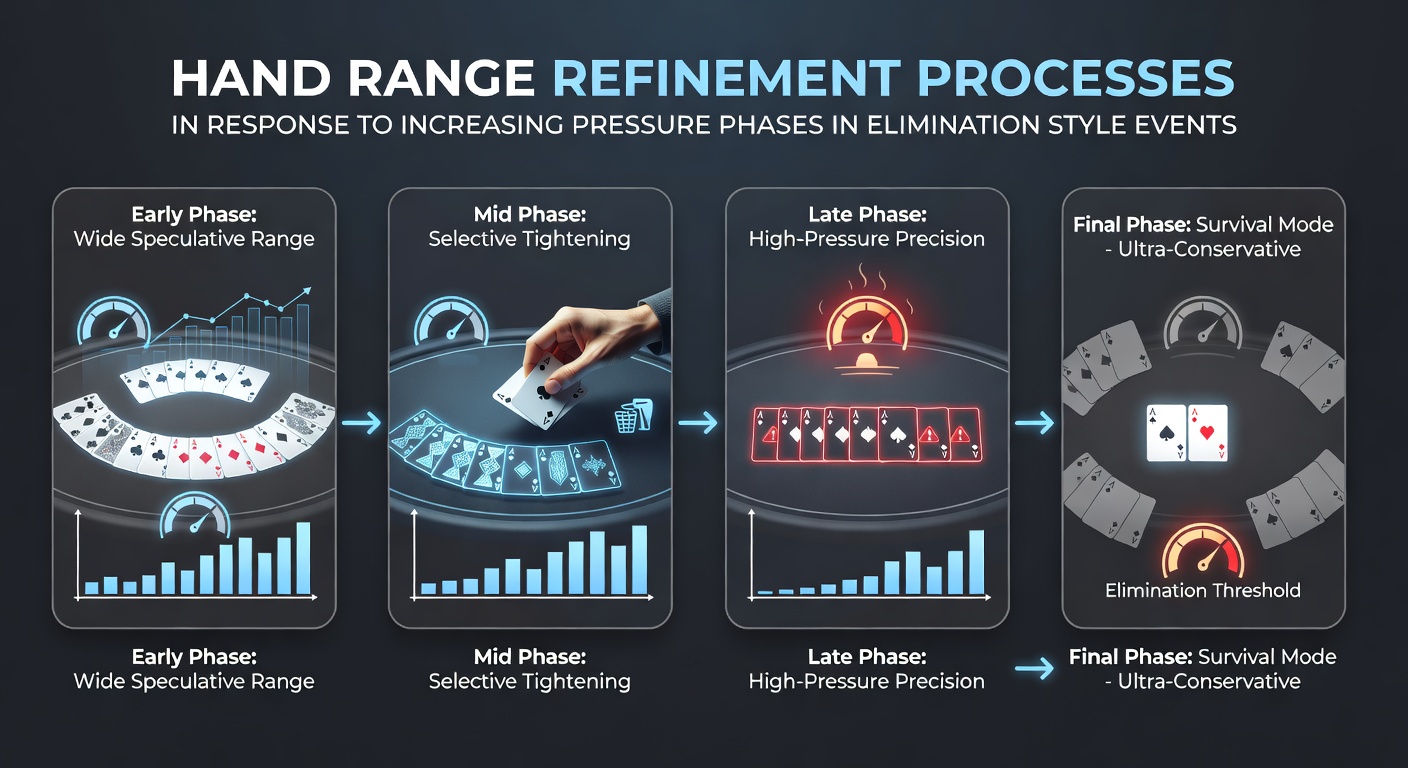
Elimination style events in poker create distinct pressure phases that shift dramatically as blinds rise and field sizes shrink, forcing participants to refine hand ranges continuously throughout each stage. Data from major tournament circuits shows that stack-to-blind ratios compress steadily after the first few hours, prompting measurable changes in opening frequencies and continuation betting patterns according to tracking databases maintained by professional analysts.
Defining Pressure Phases Across Tournament Structures
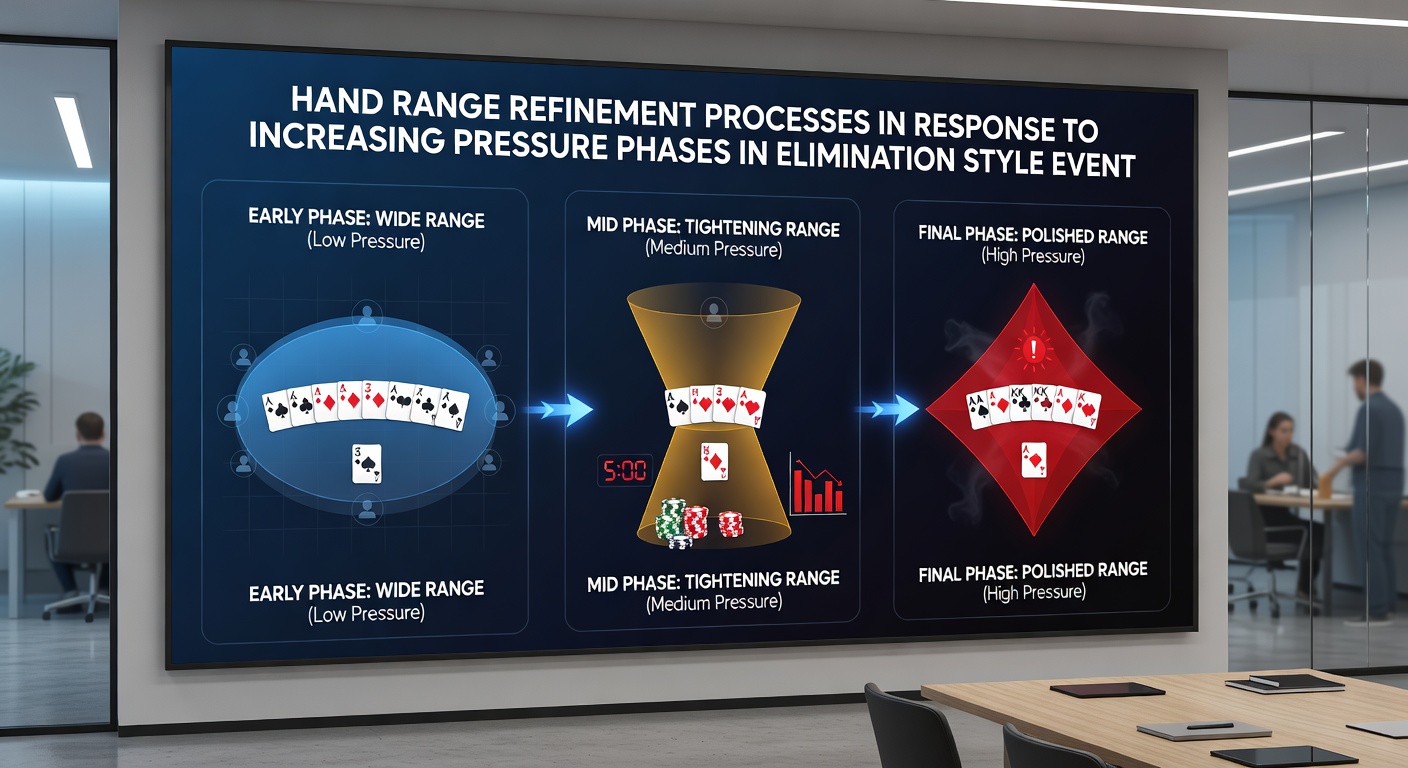
Early levels feature deep stacks and minimal antes that allow wider ranges from all positions, whereas mid-event stages introduce antes and escalating blinds that compress effective stack depths to twenty to forty big blinds on average. Researchers tracking thousands of hands in live and online series note that these transitions correlate with tighter three-bet ranges and increased fold equity exploitation by players holding positional advantage. Late phases accelerate further when pay jumps approach, with independent chip model calculations altering expected value calculations for marginal holdings.
Refinement Mechanisms in Early to Mid Stages
Players respond to initial pressure increases by tightening suited connectors and small pairs from early positions while maintaining wider defending ranges in the big blind. Software simulations used by training platforms demonstrate that this selective narrowing preserves fold equity without sacrificing too much playability once stacks dip below fifty big blinds. Observers tracking May 2026 festival schedules, including preliminary events leading into larger summer series, report similar patterns emerging once registration closes and antes enter play.
Position remains the dominant factor throughout these adjustments because late position allows greater post-flop maneuverability even with marginal holdings. Studies of historical tournament data indicate that button and cutoff ranges expand relative to under-the-gun ranges by approximately fifteen percent once average stacks fall below thirty big blinds, reflecting the value of initiative in shorter stack environments.
Late Stage Adjustments and ICM Influence
As fields narrow to the money bubble and beyond, independent chip model considerations further restrict opening ranges from all seats except the shortest stacks, which gain leverage through all-in shove dynamics. Figures compiled by regional gaming authorities in Nevada reveal that bubble survival rates improve when participants reduce speculative hand volume by roughly twenty-five percent compared with earlier levels. Those who studied this know that short-stack push-fold charts become essential references once effective stacks drop below fifteen big blinds, replacing standard range construction entirely.
Final table pressure phases add another layer because payout structures reward survival over chip accumulation in many cases, leading to even tighter calling ranges against raises. Research from the University of Alberta's poker studies group highlights how equilibrium strategies shift under varying payout structures, showing measurable differences in range widths between flat payout events and those with steep jumps.
Practical Tools Supporting Range Refinement
Modern participants rely on precomputed charts and real-time solvers to maintain accuracy across pressure transitions, with many events permitting limited device use between hands. Industry reports from Canadian regulatory bodies note increased adoption of these tools among mid-stakes fields, correlating with more consistent range adherence during rapid blind escalations. External tracking services further allow post-session review of hand histories, revealing deviations that occur most frequently during the first ante level and the final three tables.
Geographic variations appear in how quickly players adapt, with data from Australian tournament circuits showing earlier tightening in Asian festival stops compared with North American schedules, possibly due to differing average field sizes and structure speeds. These patterns emerge consistently across large sample sizes without requiring subjective interpretation of individual decision quality.
Conclusion
Hand range refinement in elimination events follows predictable structural responses to rising pressure, documented through extensive hand tracking adn simulation work across multiple jurisdictions. Participants who align their ranges with stack depth, position, and payout implications maintain competitive edges as events progress from opening levels through final tables, a process supported by available analytical resources and historical performance records.