Regional Variations in Player Retention Linked to Customized Bonus Structures Within Virtual Gaming Communities
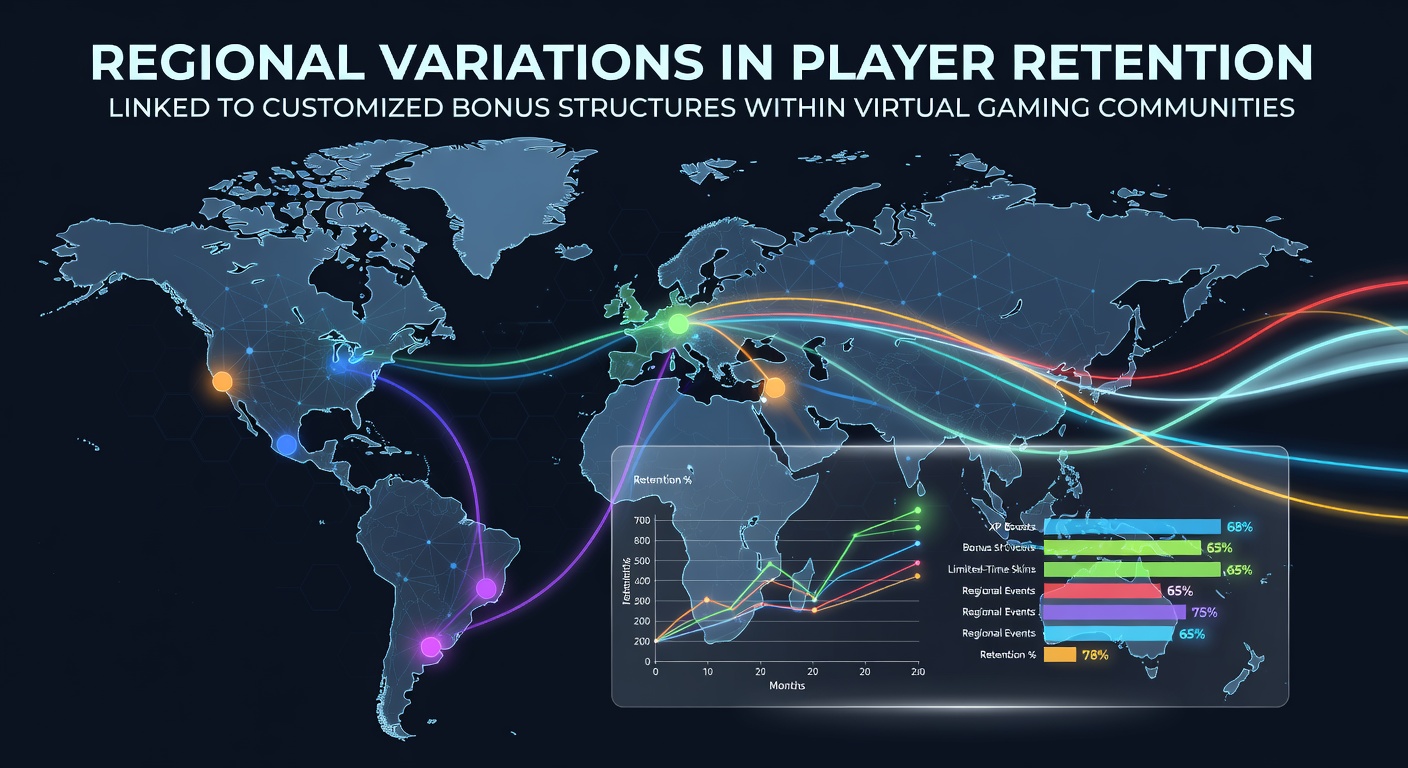
Virtual gaming communities have expanded rapidly in recent years, and customized bonus structures now play a central role in how platforms maintain player engagement across different geographic areas. Retention rates vary significantly by region because bonus designs often reflect local preferences, regulatory environments, and cultural attitudes toward rewards. Data collected from multiple platforms in 2025 and early 2026 shows clear patterns where tailored incentives produce higher return rates in specific markets while standard offers generate lower engagement elsewhere.
Customized Bonus Structures and Their Core Components
Platforms adjust bonus types to match player behavior patterns observed in each region, and these adjustments include welcome packages, loyalty multipliers, time-limited challenges, and personalized milestone rewards. Researchers tracking user activity note that North American communities respond strongly to competitive leaderboard bonuses while Asian markets show higher interaction with daily login streaks and social sharing incentives. European platforms meanwhile incorporate regulatory-compliant cashback systems that tie directly to session length rather than deposit volume.
Retention metrics improve when bonuses align with spending habits and play frequency, and analysts at industry research firms have documented retention lifts of 15 to 30 percent in regions where customization matches local data. In June 2026, several major platforms released updated bonus frameworks following analysis of player drop-off points, and those updates produced measurable increases in six-month return rates across targeted user segments.
North American Retention Patterns
North American virtual gaming communities demonstrate strong responses to bonus structures that emphasize progression and competition. Platforms operating in the United States and Canada frequently deploy tiered reward ladders that unlock additional content or currency based on cumulative playtime, and these systems correlate with retention rates that exceed global averages by roughly 12 percent according to aggregated platform reports. Observers note that players in these regions often extend sessions when bonus multipliers scale with community events or seasonal tournaments.
Regulatory frameworks in certain states and provinces influence bonus design, and operators must balance incentive generosity against compliance requirements. This balance leads to offers that emphasize free-to-play pathways alongside optional purchases, which helps sustain broader user bases without rapid attrition among non-spending participants.
European and Asia-Pacific Market Contrasts
European platforms adjust bonus structures to accommodate stricter advertising rules and consumer protection standards, which results in reward systems focused on time-based engagement rather than high-value deposit matches. Retention data from these markets indicates steady participation when bonuses provide incremental benefits that accumulate over weeks instead of front-loaded windfalls. Platforms in Germany and the Netherlands, for example, report improved six-month retention when loyalty programs reward consistent low-stakes activity.
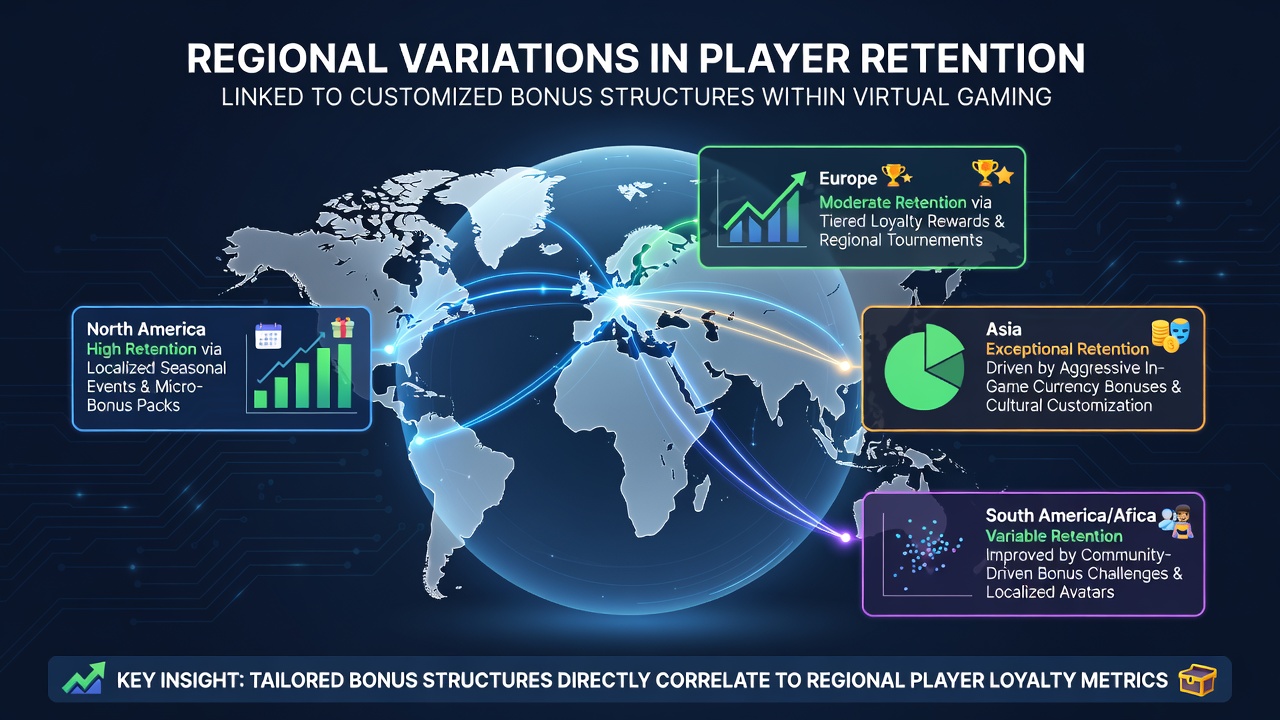
Asia-Pacific communities show distinct preferences for social and event-driven bonuses, and platforms serving markets in Singapore, South Korea, adn Australia achieve higher retention when rewards tie into group achievements or cross-game collaborations. A 2025 industry report prepared by the Entertainment Software Association found that collaborative bonus events increased monthly active users by 22 percent in these regions compared with individual reward models. Cultural emphasis on community status drives participation in these systems, and platforms continue to refine offer timing to coincide with local holidays and gaming festivals.
Data Sources and Analytical Approaches
Analysts combine telemetry from in-game activity logs with survey responses to isolate which bonus elements drive retention in each market. Figures released by Gaming Regulation in 2026 highlighted retention variances of up to 18 percentage points between regions using identical bonus templates versus those employing localized customization. These differences persist even after controlling for game genre and average session length, which suggests that cultural and regulatory factors exert measurable influence on long-term player behavior.
Longitudinal studies conducted by academic teams at several universities track cohorts of players across multiple regions, and preliminary findings indicate that bonus personalization based on device usage patterns and play-time distribution further refines retention outcomes. Platforms that integrate machine-learning models to predict optimal bonus timing report lower churn rates in both high-engagement and casual user groups.
Conclusion
Regional variations in player retention remain closely linked to the degree of customization applied to bonus structures within virtual gaming communities. Platforms that analyze local data and adjust reward mechanics accordingly demonstrate more stable user bases over extended periods. Continued monitoring through 2026 and beyond will clarify how evolving regulations and shifting player preferences shape these relationships across additional markets.